Chemical Thinning
At a Glance
| Challenge | Spray thinning an orchard with the optimal amount of chemical applied to each individual tree, while minimising labour and chemical costs to achieve a desired harvest crop load. |
|---|---|
| Solution | Green Atlas Cartographer rapidly provides accurate spray prescription maps from its own maps of flower and fruitlet distributions, compatible with a large variety of Variable Rate Spray (VRS) equipment. |
| Result | A more uniform and higher quality crop load using fewer chemical and labour resources, with additional long-term labour savings due to the reduction of biennial bearing. |
| Applicable Crops | Apples, Pears, Stonefruit/Summerfruit at flower and early fruitset (and any crop supported by Cartographer). |
| VRS Controllers | Red-ant, Waatic, Vantage, Supray, Munckhof, Gotrack, Darwin, and more on the way. |
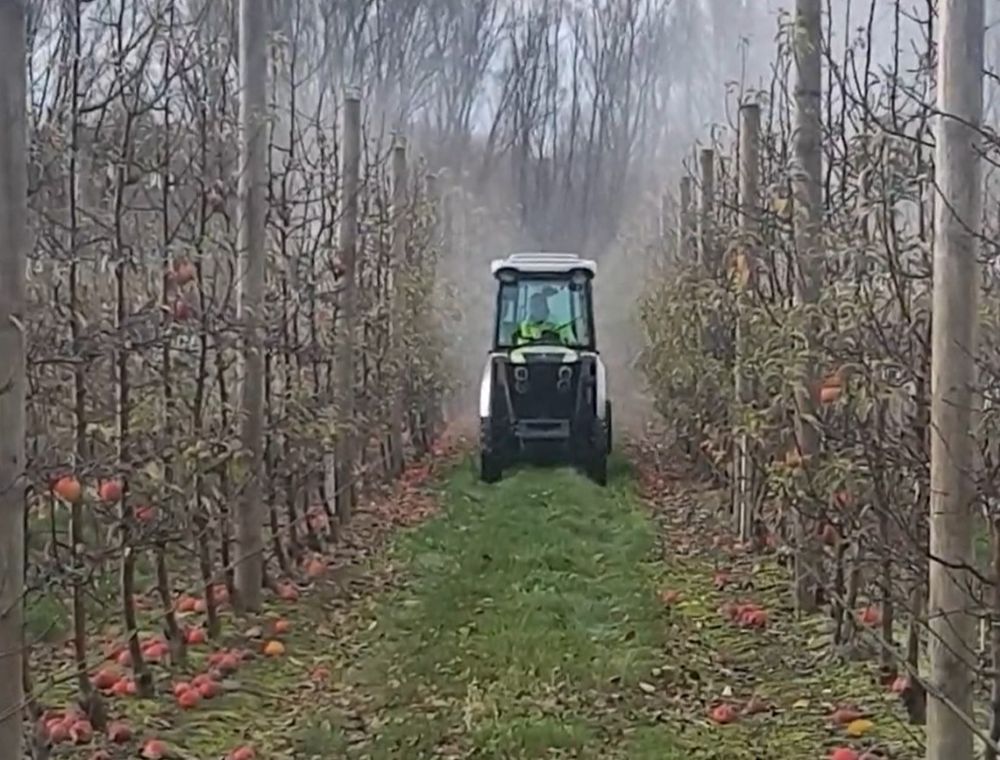
The Inefficiency of 'Average' Management
Uniform spraying wastes resources and creates problems.
In a traditional orchard, a grower counts flowers on a small number of 'representative' trees and sets a spray rate for what is typically several thousand trees based on that tiny sample. This creates major problems:
- Resource Waste: Trees with a low flower load receive the same amount of chemical as those with a heavy load, risking over-thinning weak trees and potentially killing their entire crop.
- Manual Labour: Conservative chemical application leaves high variation, forcing labourers to spend more time correcting inefficiencies through expensive hand thinning.
- Alternate Bearing: Inconsistent thinning leads to trees being over-stressed one year and under-productive the next, making sustained predictable yield a moving target.
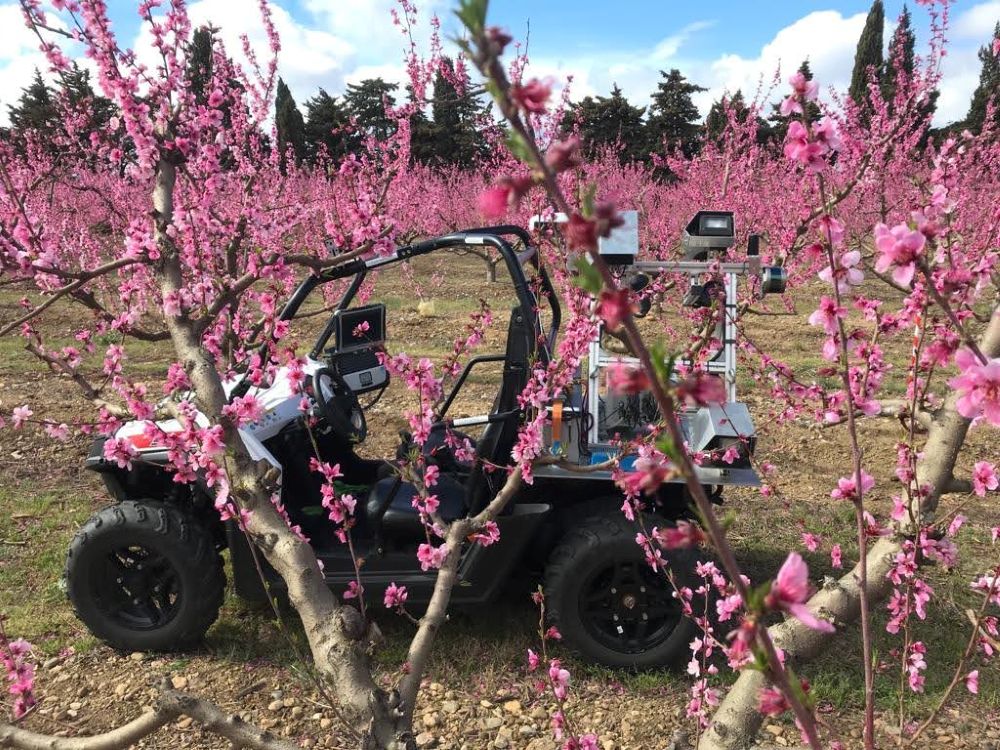
Bridging the Gap with Cartographer
From flower maps to spray prescriptions.
Green Atlas Cartographer creates a digital map of the entire orchard, enabling precision controlled Variable Rate Spraying (VRS).
- Rapid High-Resolution Mapping: Using cameras and LiDAR, Cartographer maps the distribution of flower clusters or fruitlets at sub-tree level while moving at 20km/h+.
- Digital Prescription Maps: Raw data is processed into a Zone or Grid Map, making it easy for an agronomist to set spray rates for every tree. Maps are converted into standard formats (Shapefile or GeoJSON) that talk directly to the sprayer's rate controller.
- Hardware Compatibility: Whether using a specialised precision sprayer or a standard air-blast sprayer retrofitted with solenoid-controlled nozzles, Cartographer data can be converted into the required format.
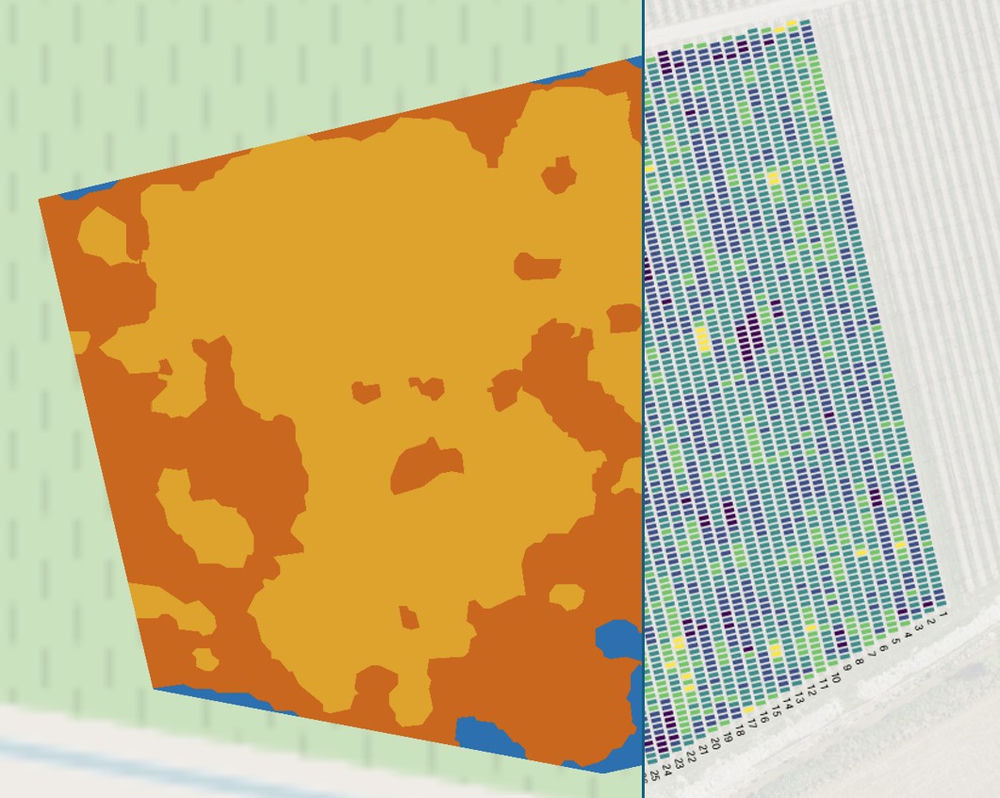
Precision at Scale
Treat every tree as an individual.
By moving from uniform to precision spraying, growers achieve several key wins:
- Chemical Savings: By shutting off nozzles in gaps and reducing flow on low-density trees, spray-to-waste is minimised.
- Optimised Labour: Precise chemical thinning means follow-up manual thinning is much faster. Labourers only perform light touch-ups rather than heavy corrective thinning.
- Crop Uniformity and Premium Sizing: A uniform target crop load means the tree uses its resources to full advantage, resulting in more consistent fruit size, colour and brix that fetch premium prices.
- Breaking Biennial Bearing: Consistent thinning helps break the alternate bearing cycle, ensuring steady income year after year.
Get Started
Achieve similar results in your orchard.
Find your nearest Green Atlas service provider to discuss how precision chemical thinning can work for you.